


 admin
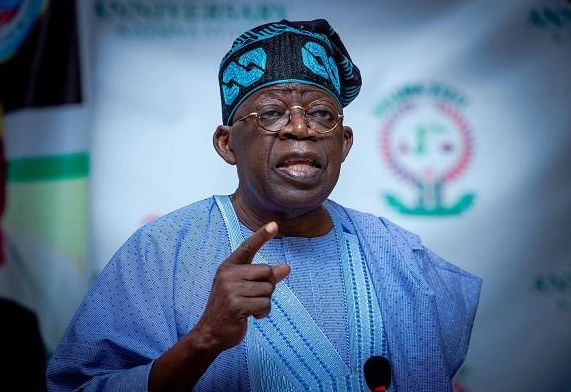
A cross examination need not be hostile. It is not a storm; it is a test of evidence. It must not roam at large over the world of its object. It must hold the witness to the facts. And on the facts so far, President Bola Ahmed Tinubu’s reforms deserve a fair hearing, not the reflexive dismissal that has become fashionable.
Since 1999, Nigeria’s political history has been a chronicle of postponed decisions. Successive administrations knew the weaknesses of the state. They lacked the nerve to confront them. Petroleum subsidy, multiple exchange rates, centralised policing, fiscal distortions and a swollen centre were the enduring furniture of national dysfunction. <span;>From Obasanjo to Buhari, diagnosis was never the problem. The political will to reform was.
Tinubu chose another path. Since May 2023, his administration has confronted several entrenched arrangements at once. The significance lies not only in the reforms but in the will to challenge interests once thought untouchable. Courage to pull down an old structure is not, by itself, competence to raise a better one. But caution is no virtue when it preserves a failing system. Nation building demands courage, and Rome was not built in a day.
The removal of the petroleum subsidy was the defining act. For decades the subsidy devoured public resources, distorted incentives and enthroned corruption. Previous governments knew it could not endure. They flinched under pressure. Tinubu did not. The costs were real: transport fares rose, food prices climbed and household purchasing power thinned. Yet the gains are beginning to surface. Fiscal space has opened for infrastructure, social protection and productive investment. Pain in transition is not proof of recklessness. It is the price of ending a policy that was already dying. The relief is trickling down, slowly and imperfectly, but surely.
Foreign exchange reform followed the same logic. Consolidating the many windows sought to end arbitrage and privileged access to hard currency. The naira’s fall exposed the fragility of an import dependent economy. It also stripped away distortions that rewarded speculation over production. A currency cannot be strengthened by decree. Its strength must rest on production, exports, investment and confidence. Those foundations are being laid, even where the results are not yet visible.
Tax reform is a bold attempt to modernise the fiscal architecture. The four Tax Reform Acts signed in June 2025, together with the Nigeria Revenue Service, aim to end fragmented taxation, improve administration and give the nation a coherent fiscal order. A country cannot fund swelling budgets by borrowing while it tolerates an inefficient revenue system. Taxation is a social contract, and the citizen must see value for what he gives. Budgets rising from ₦28.7 trillion in 2024 to ₦68.3 trillion in 2026 make accountability imperative. Still, the direction is right: broaden the base, simplify the system, fund development.
Perhaps no reform reaches deeper than decentralisation of the police force. The recent constitutional approval of state police forces broke from the security architecture the nation had long inherited. Nigeria is too vast, and its security challenges too complex, to rely forever on a centralised force. Local intelligence matters. Community knowledge matters.
The Supreme Court’s 2024 judgment affirming the financial autonomy of local governments is equally weighty. Local governments must become engines of grassroots development, not appendages of the state. The development commissions across the six geopolitical zones reflect an attempt to repair regional inequalities and historical deficits. These are investments in a more balanced federation.
The administration has also introduced measures to cushion hardship and widen opportunity: the Nigerian Education Loan Fund, electricity tariff restructuring, the Presidential CNG Initiative and projects such as the Lagos to Calabar Coastal Highway. Each has an economic case. Students who would have been shut out can now reach tertiary education. Cleaner and cheaper transport is being encouraged. Infrastructure is being designed to attract private capital and expand productive capacity. These are not quick fixes. They are foundations.
The Tinubu administration deserves recognition for confronting what others postponed. Recognition must not become exemption from scrutiny, but scrutiny must also be fair. National transformation has three stages: courage to confront the problem, competence to manage the transition, and institutional discipline to sustain the gains. Nigeria has passed the first. The second is underway. The third must be secured.
istory will not judge Tinubu by the number of sacred cows slaughtered. It will judge him by what he built after their removal. Disruption is not transformation. Disruption dismantles an old order; transformation establishes a better one. The courage to break the old order matters. The wisdom to build the new is the true test of leadership. On the evidence so far, this is courage, not recklessness. And a nation is not built in a day.


GIPHY App Key not set. Please check settings