


 admin
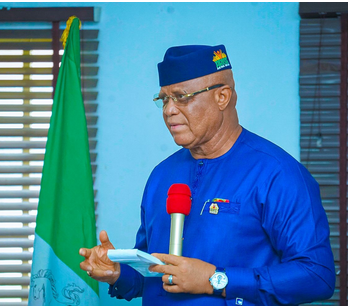
Have you ever heard the expression, “All politics is local”? Tip O’Neill, former Speaker of the United States House of Representatives, made it famous. Akwa Ibom offers a compelling illustration. Yet effective leadership requires more than understanding local needs. It demands strategic positioning, disciplined execution, and the ability to convert political influence into enduring public value. Governor Umo Bassey Eno’s first term offers an illuminating study in this art.
Through the ARISE Agenda, Eno has sought to connect governance with the aspirations of ordinary citizens. His infrastructure programme, with reported interventions spanning over 1,300 kilometres of roads and more than 40 bridges across the three senatorial districts, reflects an ambitious commitment to connectivity. The Super Oil Mill in Abak, internal roads in Ikot Ekpene, and shoreline reclamation in Eket represent different dimensions of this development drive.
Infrastructure becomes transformative when roads connect farmers to markets, bridges bring communities closer to essential services, and improved connectivity stimulates commerce. The next task is to sustain this momentum and ensure that physical development translates into productive opportunities, stronger businesses, and improved household incomes.
The administration’s social interventions reinforce this ambition. The ARISE Compassionate Homes programme addresses housing needs among vulnerable citizens, while medical personnel recruitment seeks to strengthen healthcare delivery. The proposed 350 bed Ibom International Hospital signals an ambition to expand specialist care. The reported liquidation of nearly ₦98 billion in inherited gratuity arrears also demonstrates the importance attached to restoring dignity to retirees. Sustaining these programmes will deepen public confidence and strengthen the human foundations of development.
Eno’s political realignment on June 6, 2025, when he moved from the Peoples Democratic Party to the All Progressives Congress, was a consequential strategic decision. It repositioned Akwa Ibom within the governing party at the federal level, creating opportunities for stronger institutional cooperation and access to national development priorities.
Political leadership involves understanding where influence resides and how it can serve public objectives. Sun Tzu understood the value of positioning and timing. Eno’s decision can be viewed through this strategic lens. His relationship with Senate President Godswill Akpabio further offers an important channel for advancing the state’s interests. The imperative is to translate these relationships into federal support, strategic investments, improved infrastructure, and expanded economic opportunities.
On the economic front, agricultural mechanisation, small business support, the Arise Palm Resort, the International Convention Centre, Tropicana , and Ibom Air’s expansion suggest an effort to diversify the state’s economic base. Tourism can attract investment, aviation can strengthen connectivity, and agricultural processing can create value beyond the farm.
The opportunity is to connect these initiatives into a productive economic ecosystem. Public investments should stimulate private enterprise, create sustainable employment, strengthen local supply chains, and increase internally generated revenue. With sustained diligence and intense execution, Eno can turn these initiatives into foundations for lasting prosperity.
One project, however, possesses the potential to define his legacy: the proposed Ibom Deep Sea Port.
A functioning deep sea port could transform maritime commerce, attract industries, stimulate logistics, generate employment, and establish Akwa Ibom as a major gateway for regional and international trade. Its significance extends beyond infrastructure. It could reshape the state’s economic structure for generations.
The foundations laid before this administration provide a platform for progress. Eno now has an opportunity to deploy his political capital, federal relationships, and negotiating influence to accelerate the project. He must engage the Federal Government relentlessly, coordinate relevant agencies, attract credible investors, secure financing, and pursue the supporting infrastructure required to move from planning to construction and operation.
This demands urgency, persistence, and strategic discipline. The port should become a central priority of the administration’s economic diplomacy. If Eno successfully brings it to fruition, he will deliver more than a major project. He will open a new economic frontier for Akwa Ibom, creating opportunities whose benefits could extend far beyond his tenure.
Eno appears to be moving in the right direction. The challenge is to maintain momentum, sharpen priorities, and execute with greater intensity. Roads must lead to thriving markets. Investments must generate productive enterprises. Political alliances must deliver tangible benefits. Young people must find opportunities to build their futures within the state.
History remembers leaders who transform possibilities into enduring achievements. If Eno consolidates the ARISE Agenda, advances economic diversification, and successfully delivers the Ibom Deep Sea Port, he could secure a distinguished place among the greatest leaders Akwa Ibom has produced.
Ultimately, political influence is an instrument; public prosperity is the objective. Governor Umo Eno has assembled important pieces of the development equation. His enduring achievement will depend on how decisively he brings them together. The direction is promising. The opportunity is historic. With strategic foresight, relentless diligence, and purposeful execution, he can land strongly and leave Akwa Ibom a legacy worthy of its highest aspirations.



GIPHY App Key not set. Please check settings